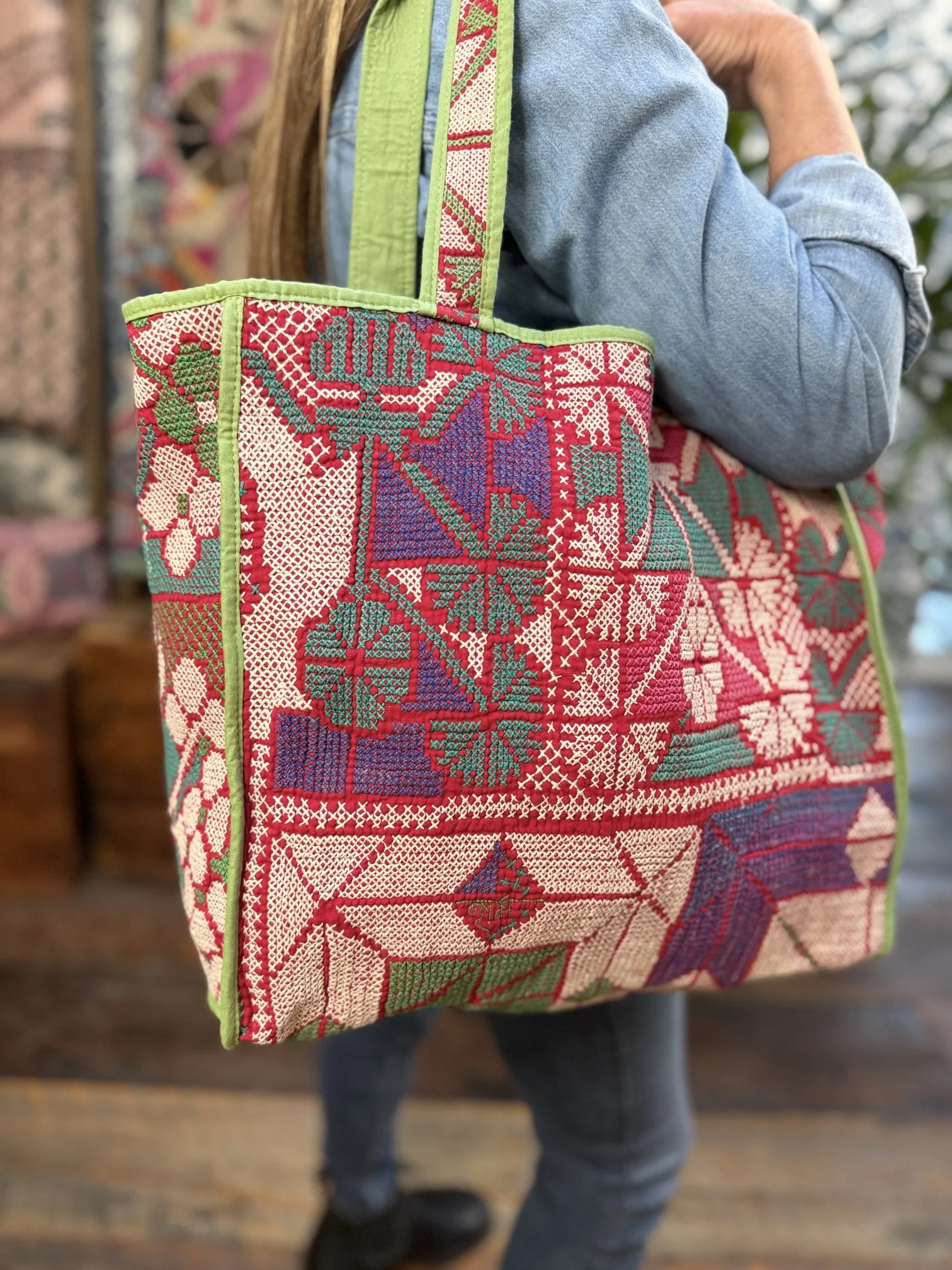
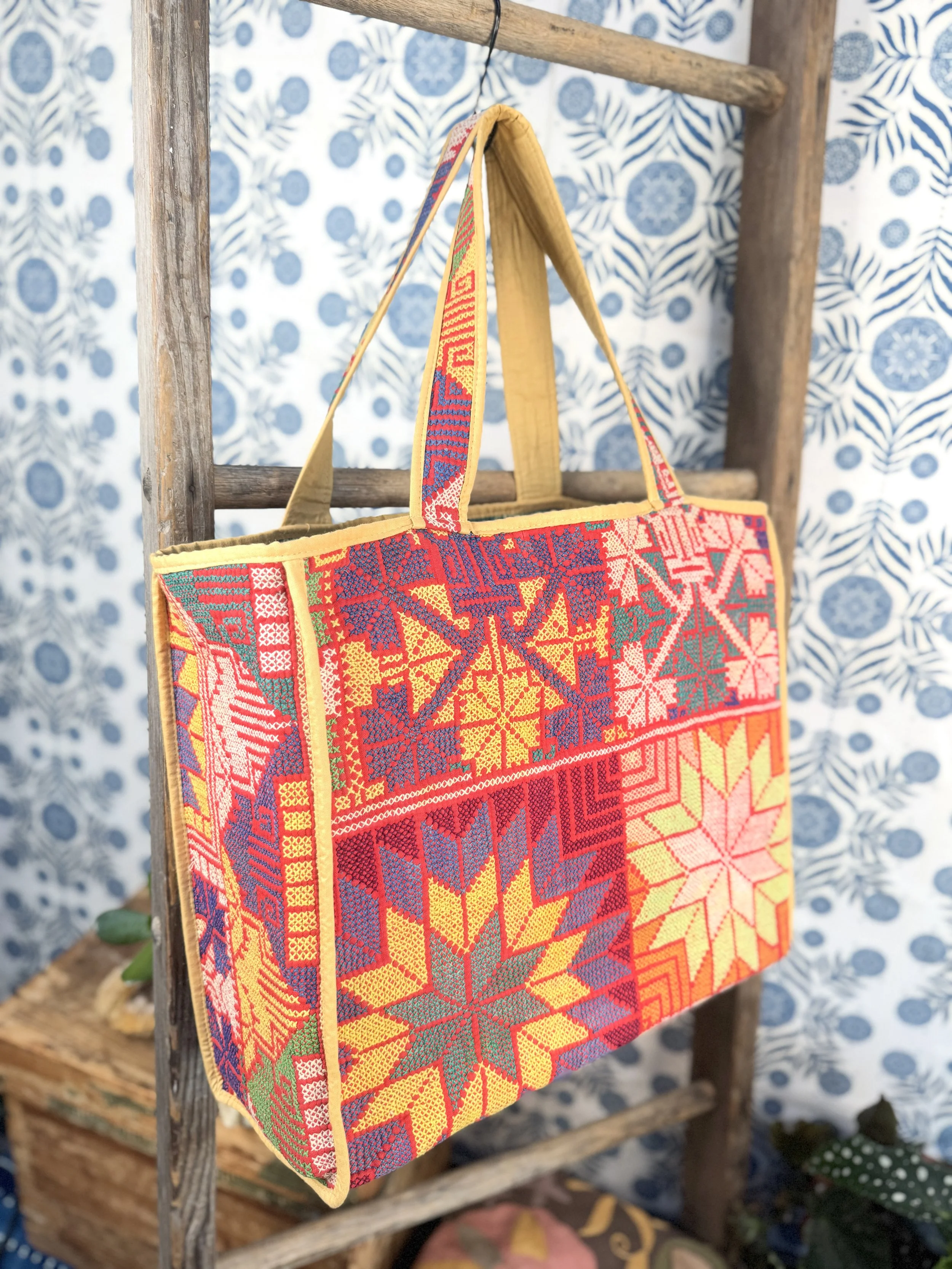
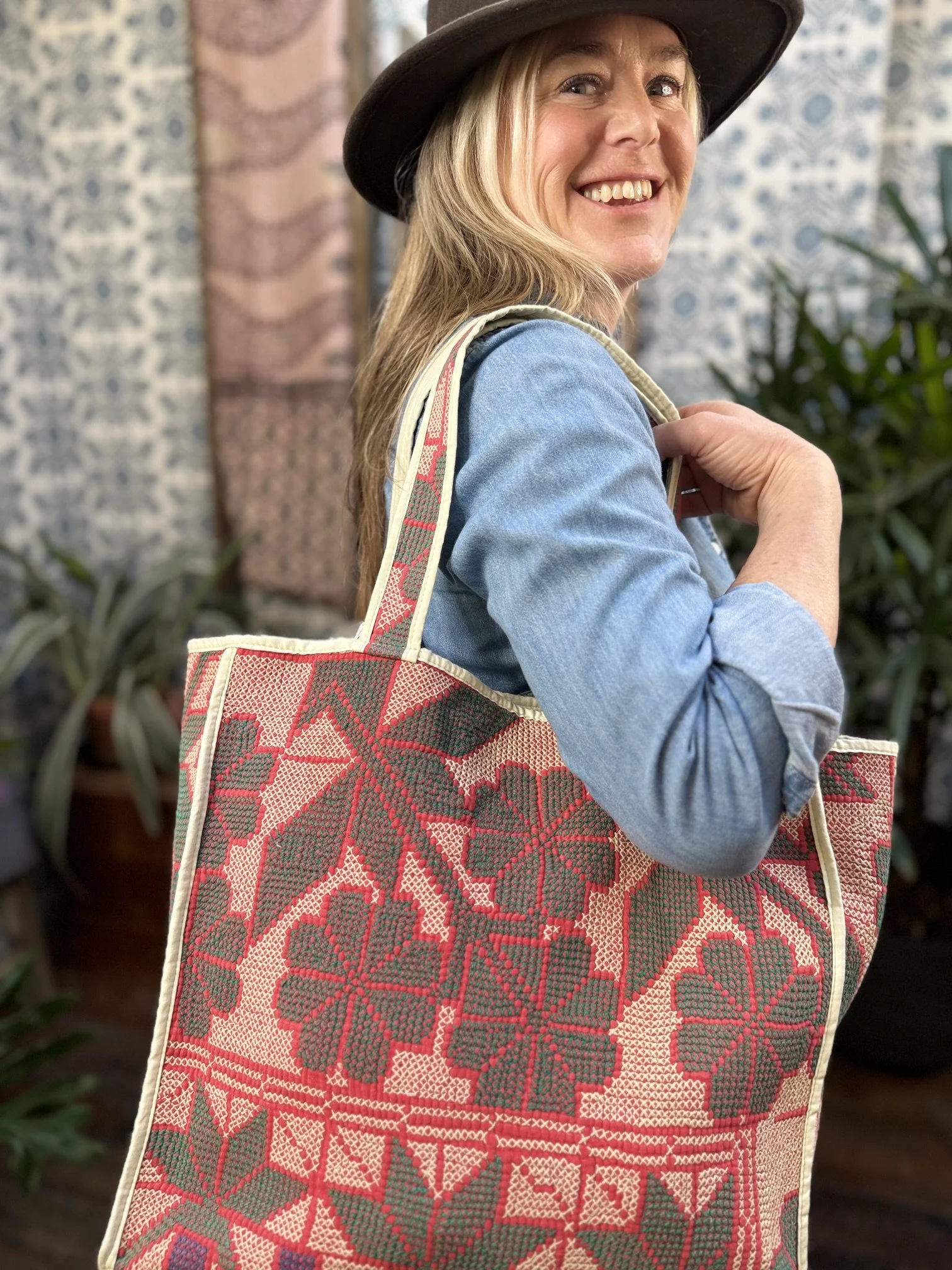
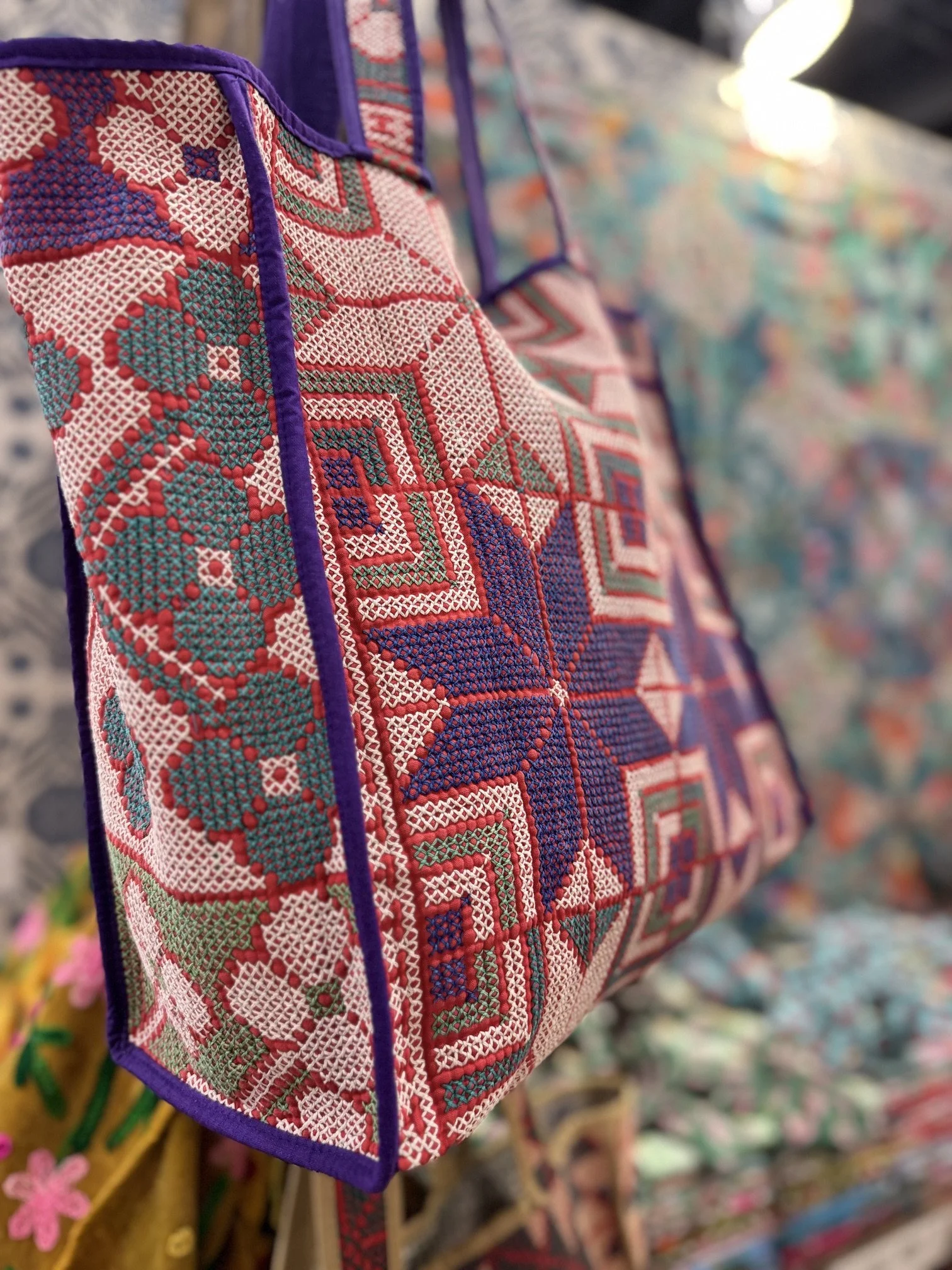
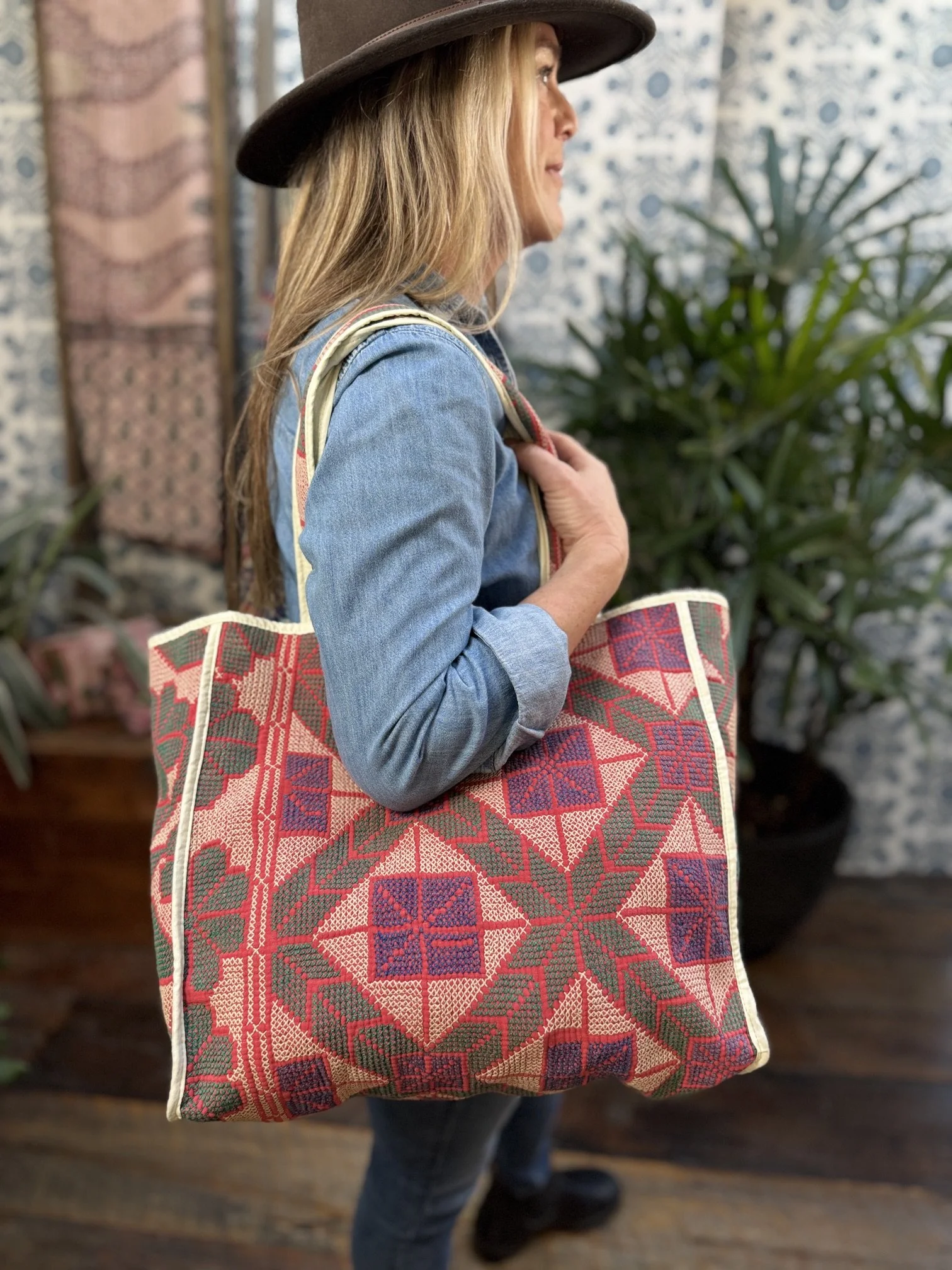
GALICHA TOTES
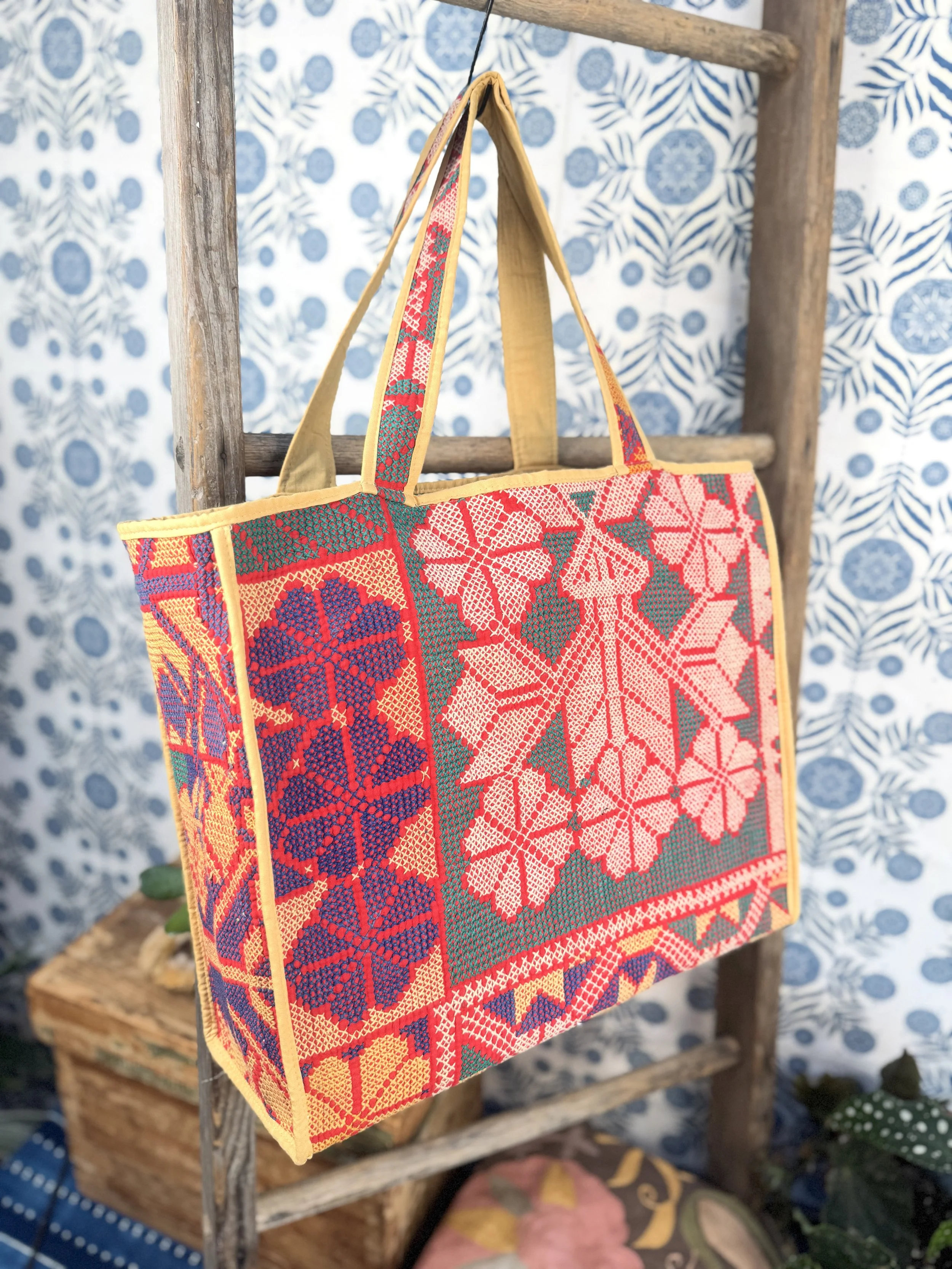
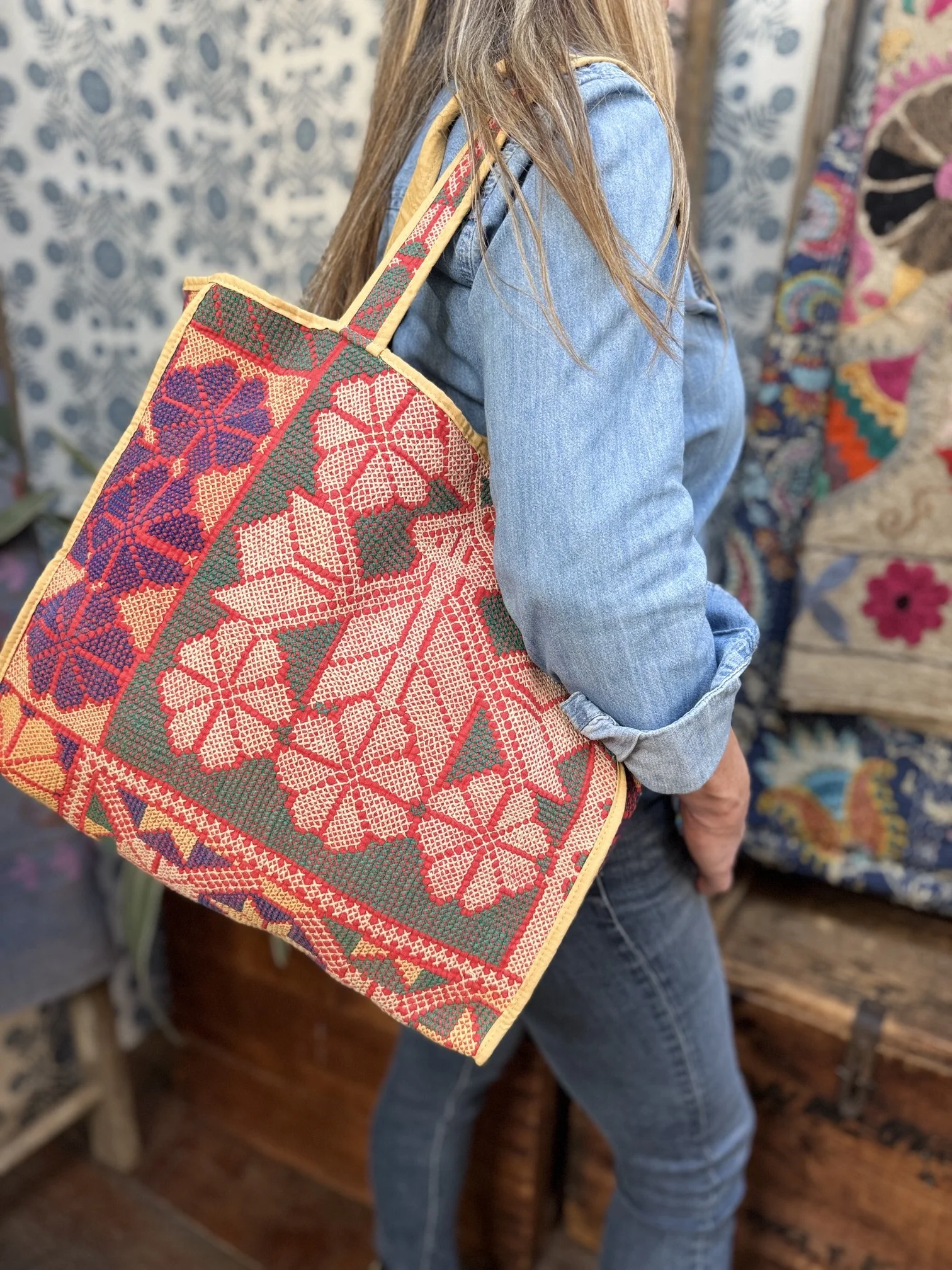
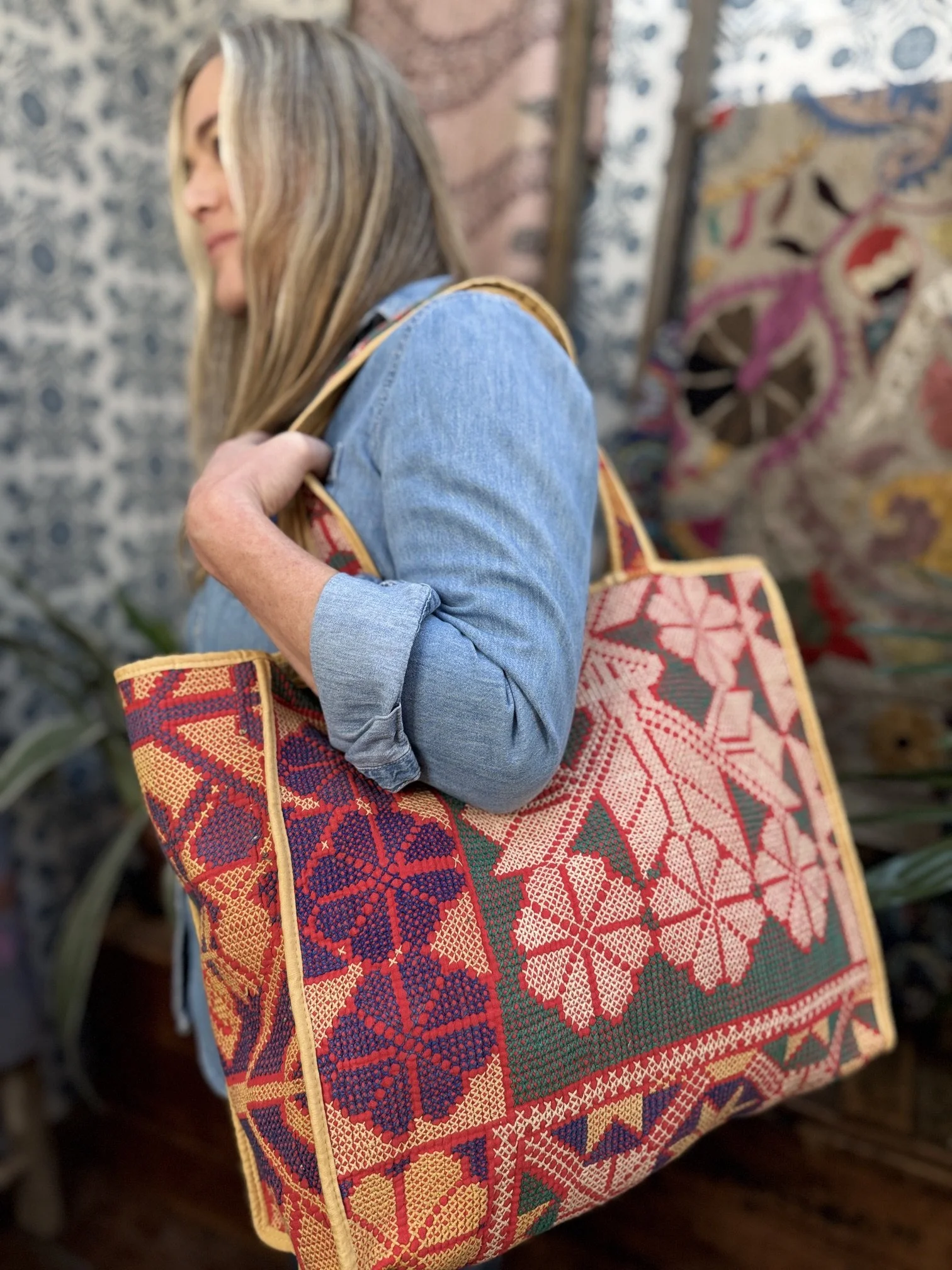
Long before they became these bags, these textiles were galicha: heavy, carpet-weight quilts stitched by women in the villages of Bangladesh, most between the 1940s and 1960s.
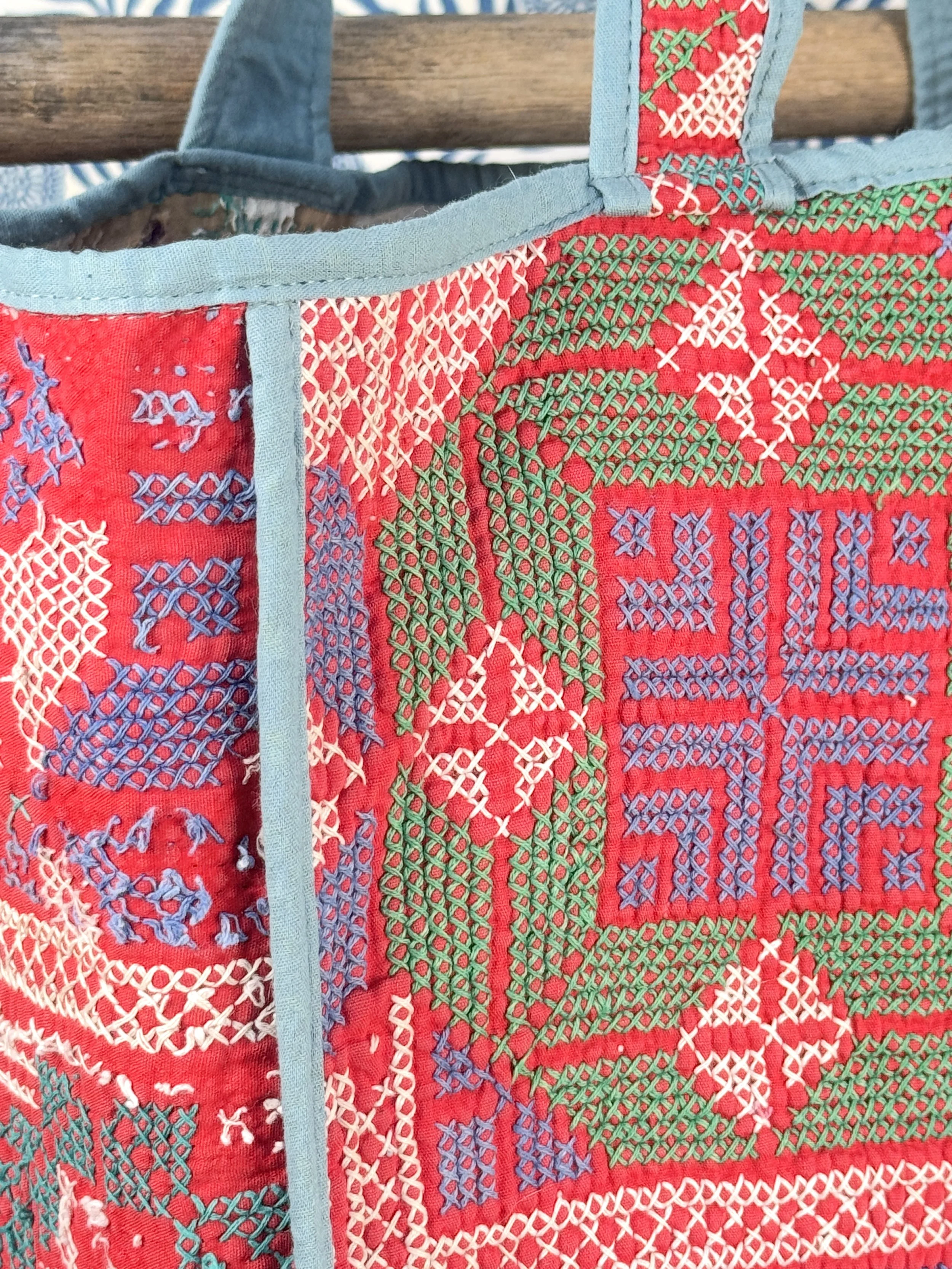
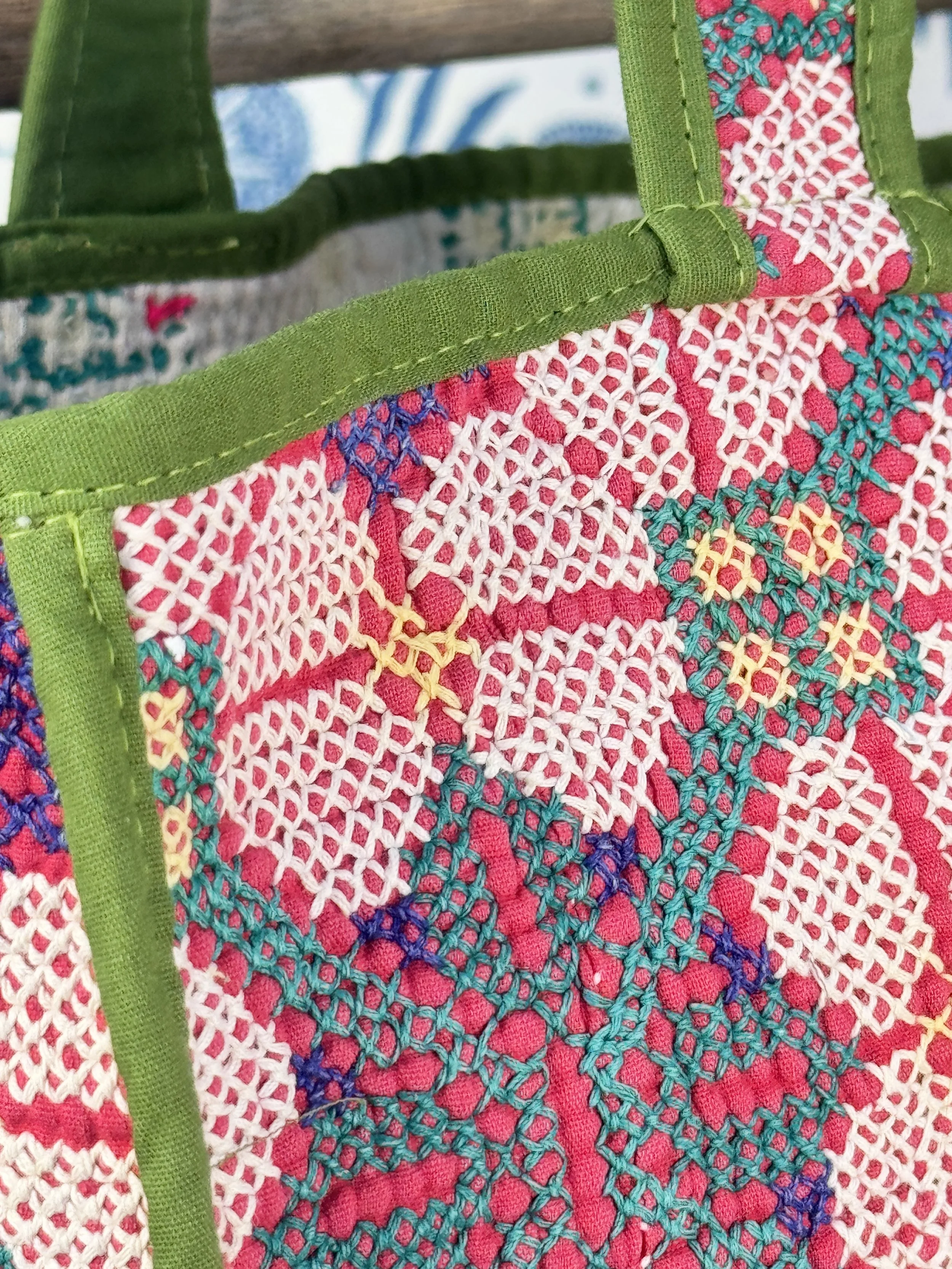
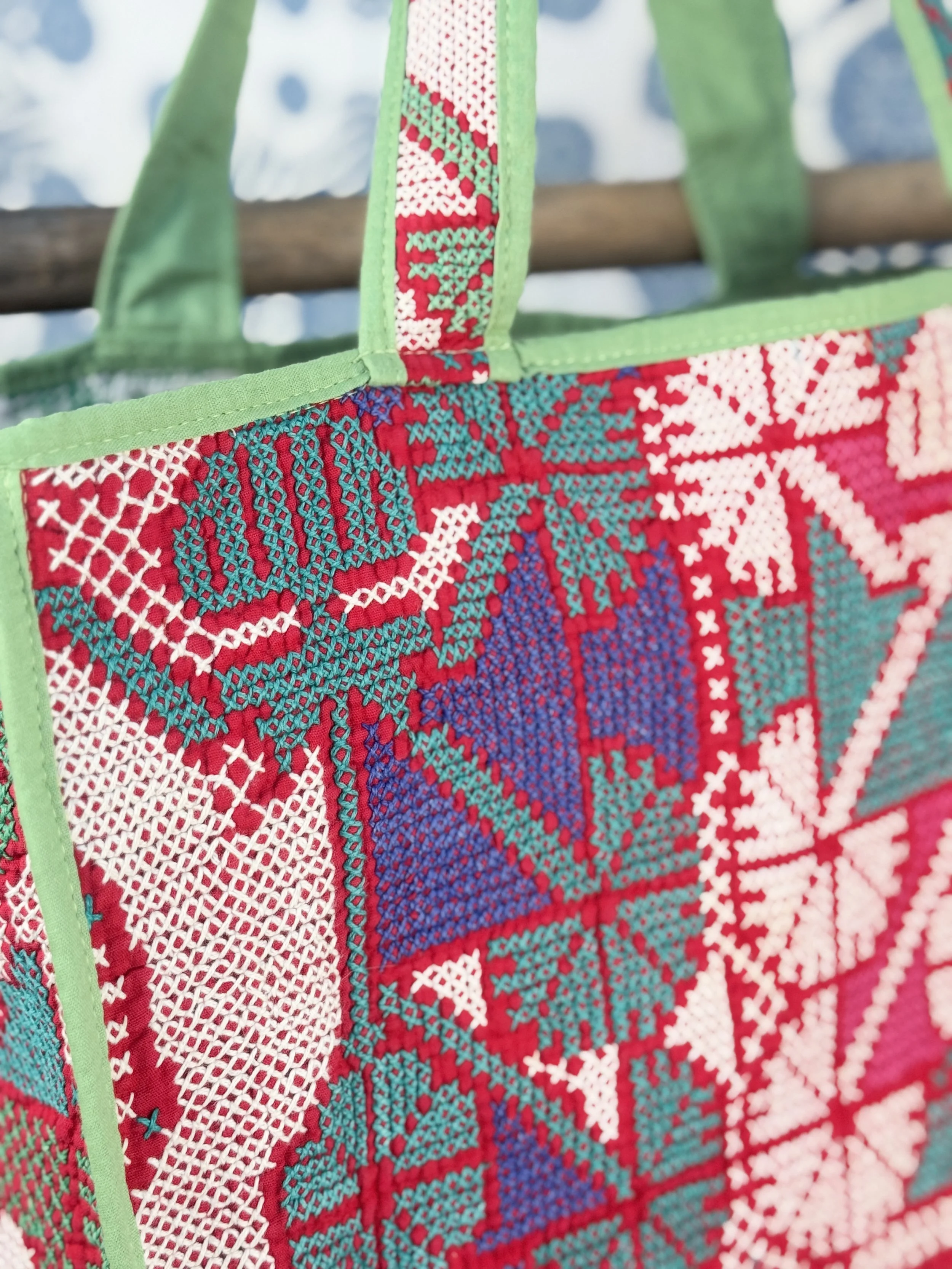
The makers’ names weren’t recorded. Even the museum pieces are listed as by an artist/maker unknown, Bengali. The wider kantha history tells us who they were, though. Conventional "nakshi” or “running stitch” kantha are quilts made by women in rural Bangladesh, and traditionally, kantha was produced for the use of the family. When the day’s chores were done, they would gather to share stories and news, needles moving all the while, adding stitch after stitch to a quilt that might take weeks to finish. Over time, these quilts came to hold a family’s history, with love and memory in every stitch. Look closely and you’ll find the tiny variations that only a human hand can make: a stitch that leans just slightly, a thread that shifts in color. They’re the fingerprints of the women who made them.
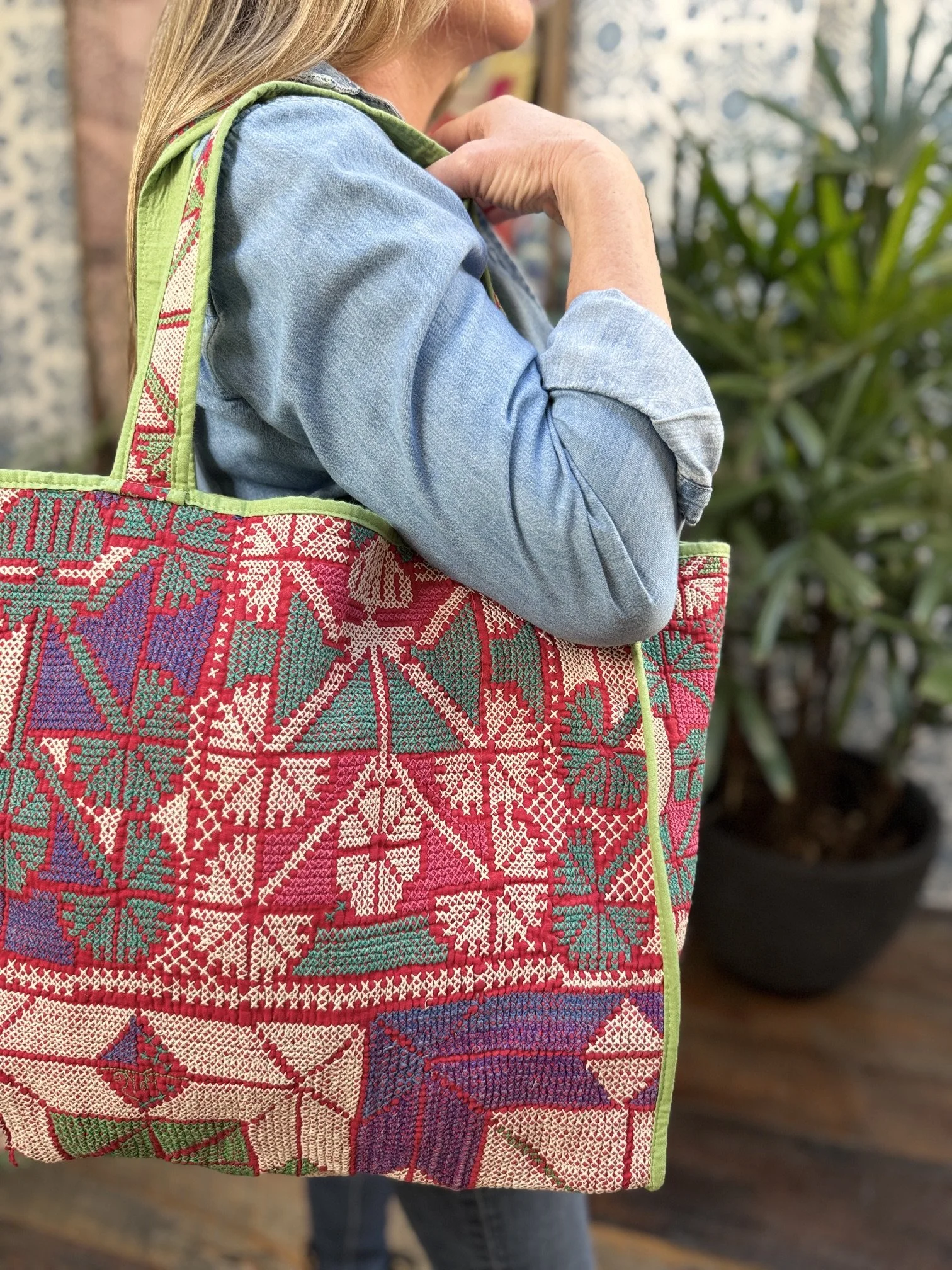
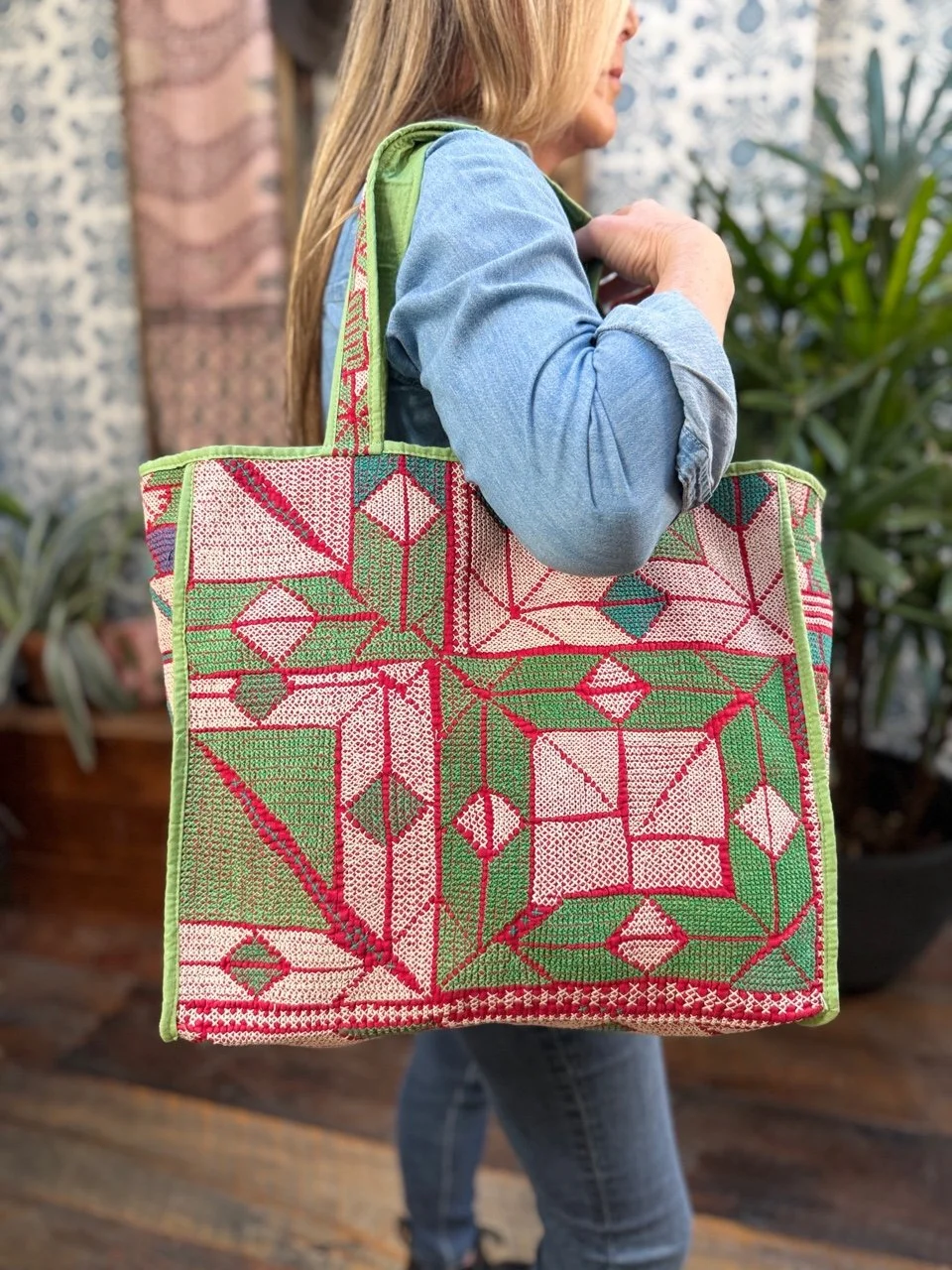
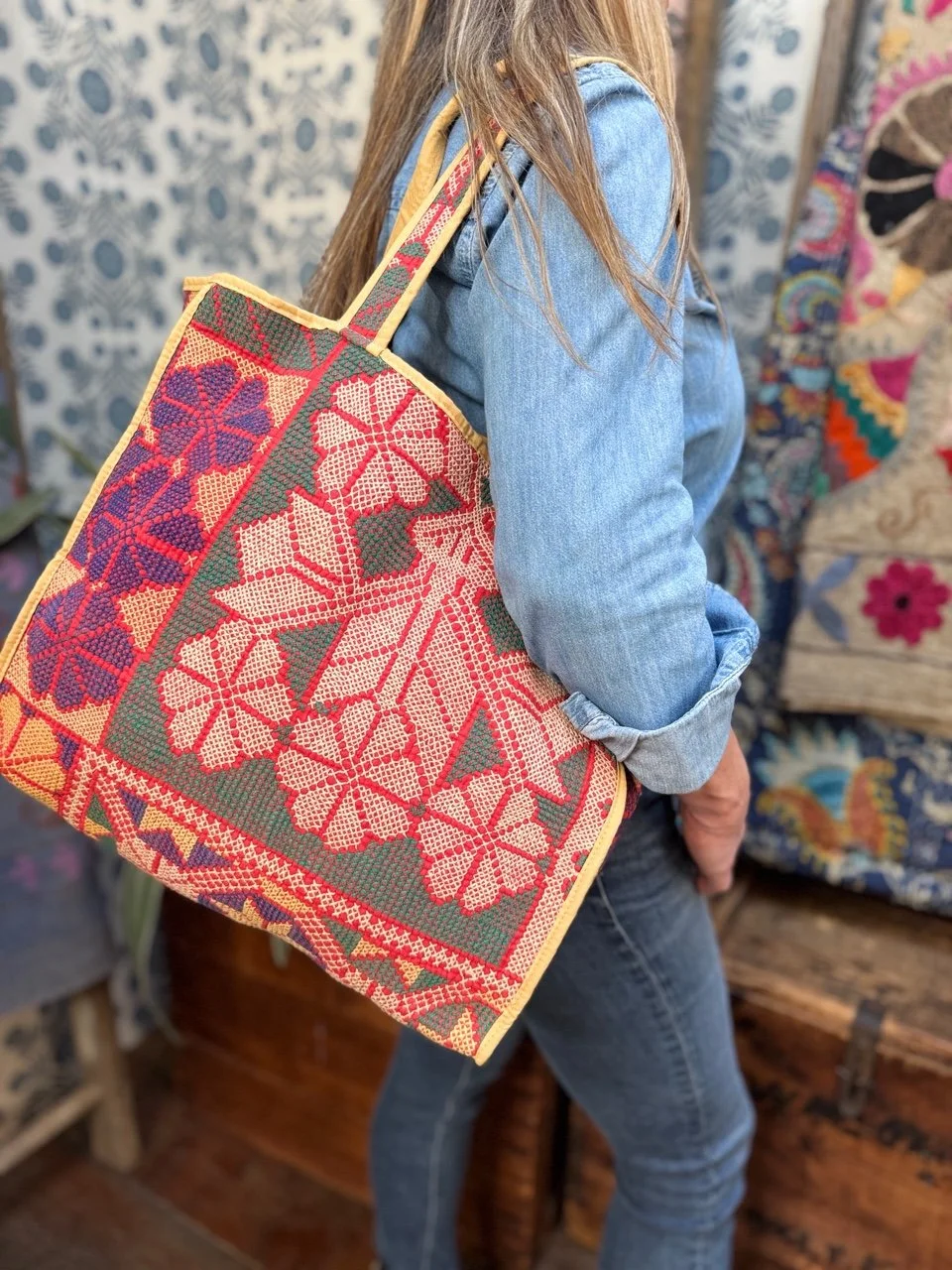
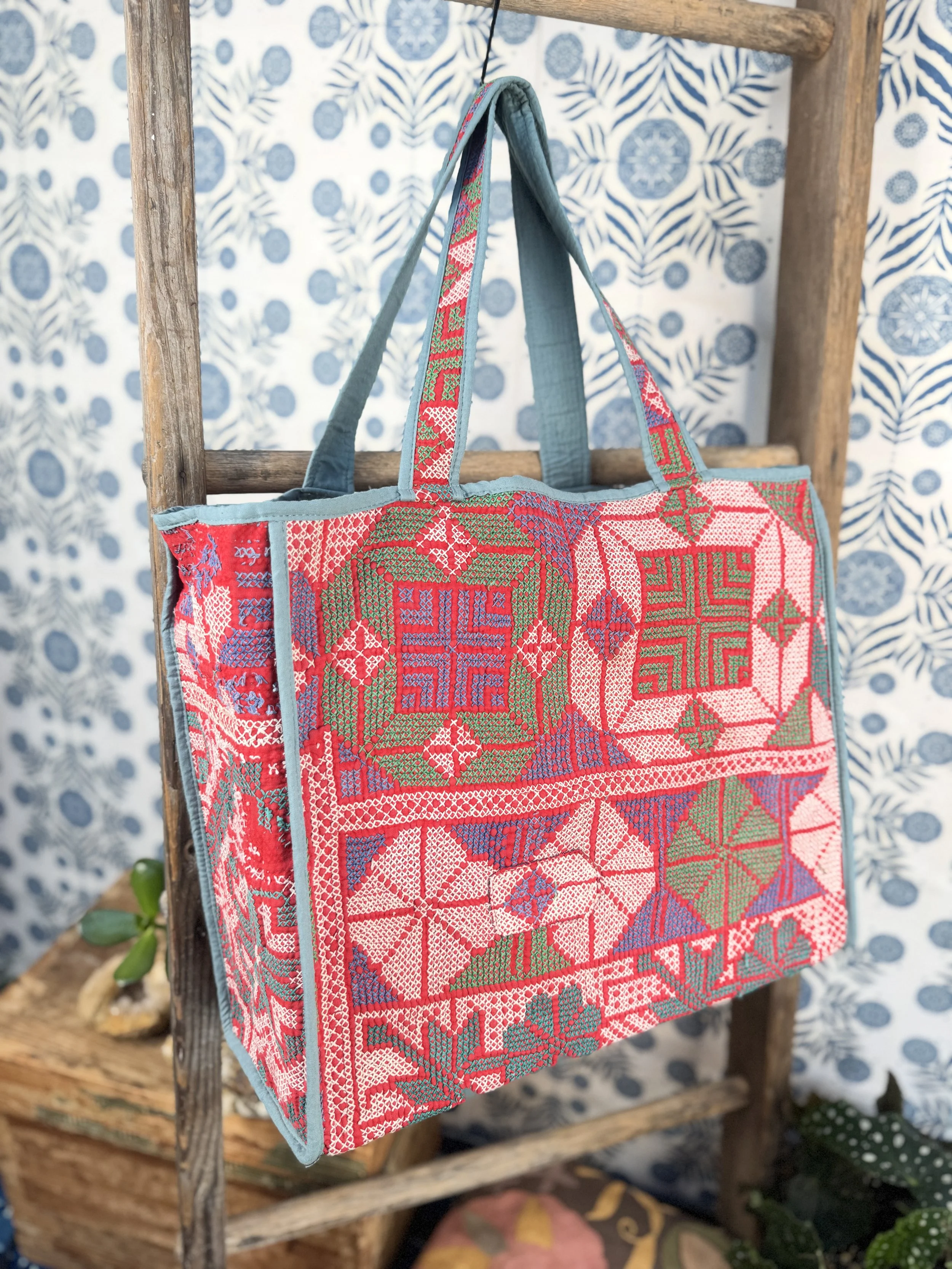
Cross stitch first arrived in Bengal with the British, and over generations these women made it entirely their own, in bold stars, flowers and pinwheels of rose, emerald and violet. Galicha quilts are now held in museum collections, including the Philadelphia Museum of Art.
We’ve given these vintage treasures a new life as totes, travel bags and pouches. Each one is one of a kind, and once it’s gone, it can never be made again.